


Lorem ipsum dolor sit amet, consectetur adipiscing elit. Suspendisse pellentesque vel dui interdum viverra. Donec vestibulum, eros luctus blandit laoreet, augue tellus

FOLLOW ME ON INSTAGRAM

+01145928421
blu@example.com
+ 01145928421
mymail@gmail.com
  • No products in the cart.

December 2025

Home2025

JUL 27, 2025 Through this blog, I aim to educate and raise awareness about psychology and human factors —topics we all encounter in our daily lives. Our minds are dynamic therefore, it is never too late to learn, and to adapt to the dynamic situation of our world. Let’s strive together for understanding and growth! Who am I? My name is Gayle Arendsz, and I was born and currently reside in Aruba. I hold a Master of Science degree in Cognitive Psychology from Leiden University in the Netherlands. My academic background has given me broad expertise in various areas of psychology, with a specialization in Cognitive Neuropsychology, Cognitive Psychology, and Human Error. I have over 10 years of experience in research and policy advising. During this time, I have worked across various departments within the Government of Aruba, including the Central Bureau of Statistics,

AUG 29, 2025 UNDERSTANDING HOW MISTAKES HAPPEN. In our previous blog post, we introduced the concept of accidents and explored some of their possible causes. In this post, we’ll take a closer look at the different types of human errors, which often play a central role in accidents—especially in complex systems and high-risk environments. What Is a Human Error? James Reason describes human error as “the failure of planned actions to achieve their desired outcomes, without the intervention of some unforeseeable event.” This definition builds on the work of Charles Perrow (1984), emphasizing that many errors are internal in origin—stemming not from unpredictable external events, but from how our minds work. The Two Main Categories of Errors Human errors are typically divided into two broad categories: 1. Skill-Based Slips and Lapses Slips are errors in execution. They occur when actions do not go as intended, often due to

NOV 13, 2025 As our world gets older, more of us have parents, grandparents, neighbors, or friends in their senior years. We see them at the grocery store, on the bus, or at family gatherings — and sometimes we notice small changes in how they speak, remember, or move through the world. What many people don’t realize is that these shifts are a natural part of aging. Understanding them can help us respond with patience and compassion instead of frustration or misunderstanding. Let’s take a closer look at what’s happening in the brain as we age and how we can all play a role in making life a little easier (and kinder) for the elderly in our communities. How Aging Affects Cognitive Functions Cognitive functions are the mental skills that help us think, learn, remember, and make decisions. As we get older, these functions don’t

OCT 6, 2025 How to design for Attention, Clarity, and Human Perception. We are surrounded by visual stimuli every single day—advertisements, event flyers, road signs, work presentations, apps, websites, reports. Whether we are navigating a city or sitting in a meeting, we are constantly processing visual information. Visual information is often use as a form of communication, and their effectiveness depends on how well they are designed for human perception. In marketing, it’s about grabbing attention and appealing to the right audience. On the road, direction signs must be instantly recognizable and easy to interpret, even at high speed. In airports or transit stations, clarity can mean the difference between catching a connection or getting lost. How often have you found yourself in a workshop or meeting, staring at a presentation full of tiny fonts, cluttered slides, or poor color choices that make it

AUG 27, 2025 Accidents can occur anywhere—whether at home, in public, or at work. When our family members or friends go to work, we all want them to return home safely. This concern extends to any situation where a person is not home, whether they have gone grocery shopping, attending a party, or having dinner. Regardless of the reason, our hope is always for their safe return. Surprisingly, many accidents also happen at home. We live in a genuinely risky world. There are different types of reasons why accidents happen; these can be categorized as active failures and latent failures. A latent failure is essentially an accident waiting to happen. The risks or hazardous situations may be present but go unnoticed, requiring only a small trigger to manifest. Conversely, an active failure is more visible and immediate. In addition to active and latent

AUG 9, 2025 Without even realizing it, we all deal with stressors on a daily basis. You might be wondering—what exactly are stressors? Stressors are any internal or external events that trigger a physiological or psychological stress response. These can range from time pressure at work to something as simple as a loud noise, like a tractor driving by. According to the American Psychological Association, stressors can be acute (short-term) or chronic (long-term), and they vary widely from person to person. What’s stressful for one person might not be stressful for another. Interestingly, stressors aren’t always negative. There are also positive stressors, known as eustress—a concept popularized in the book Why Zebras Don’t Get Ulcers by Robert Sapolsky. Eustress can actually enhance focus, boost motivation, and promote growth. So no, not all stress is bad. 🧠 WHAT IS A STRESS RESPONSE? The stress response is your body’s natural

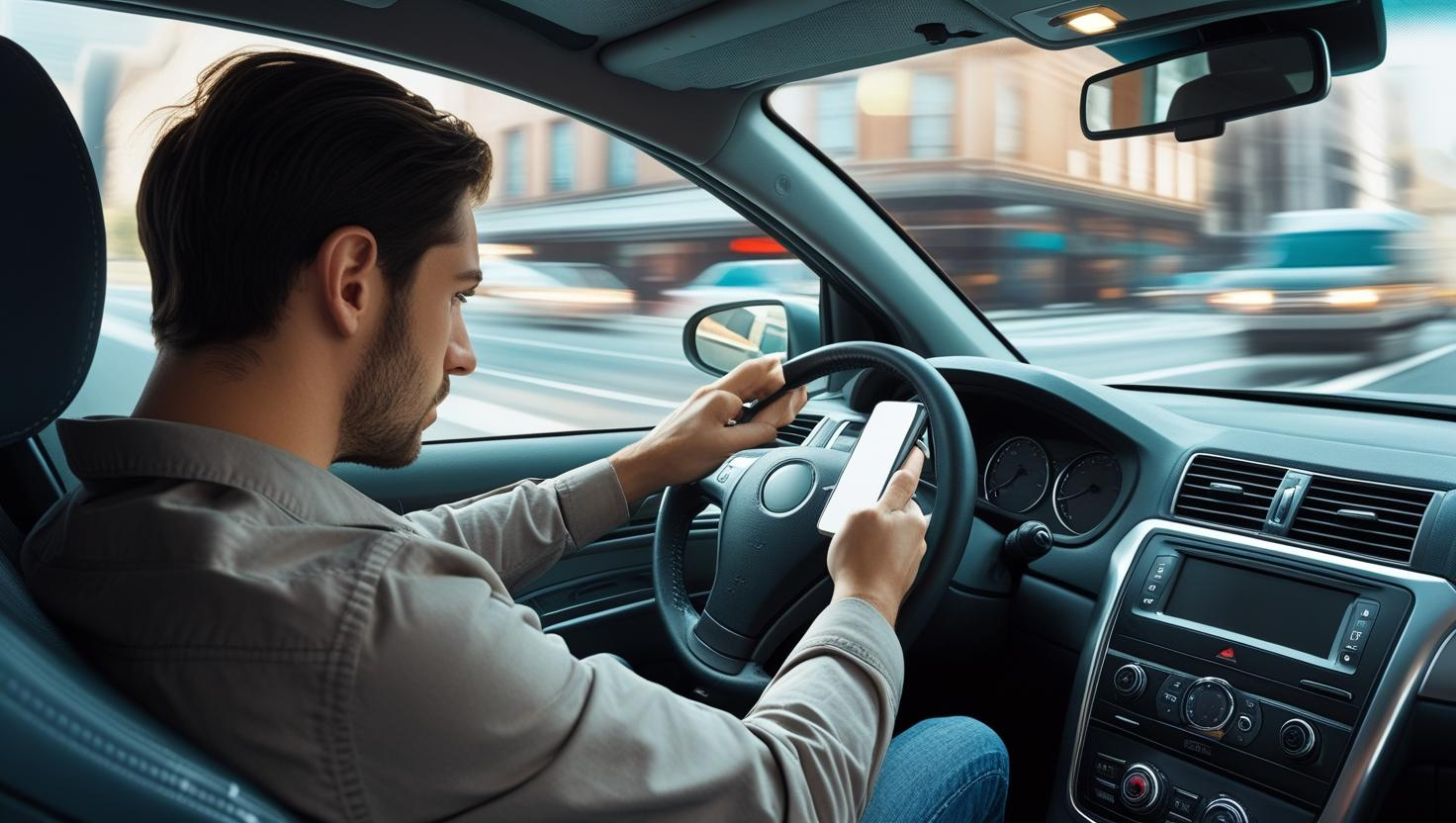
JUL 27, 2025 Every day, road accidents occur—some are minor with little to no injuries, while others are tragically fatal. A variety of factors can contribute to these incidents, including poor infrastructure, lack of traffic control, and the behaviors, attitudes, and cognitive skills of drivers. Poor road infrastructure is a major contributor to accidents. For instance, obstructions that block a driver’s view or potholes can lead to a loss of control. Another significant factor is the presence of unskilled drivers on the road. This issue can be mitigated through stricter regulation and enforcement. When there is little police presence or road control, drivers are more likely to break the rules—and eventually form dangerous habits, such as speeding or driving under the influence. Additionally, a decline in cognitive skills can impair a driver’s ability to react and make safe decisions. This decline may be